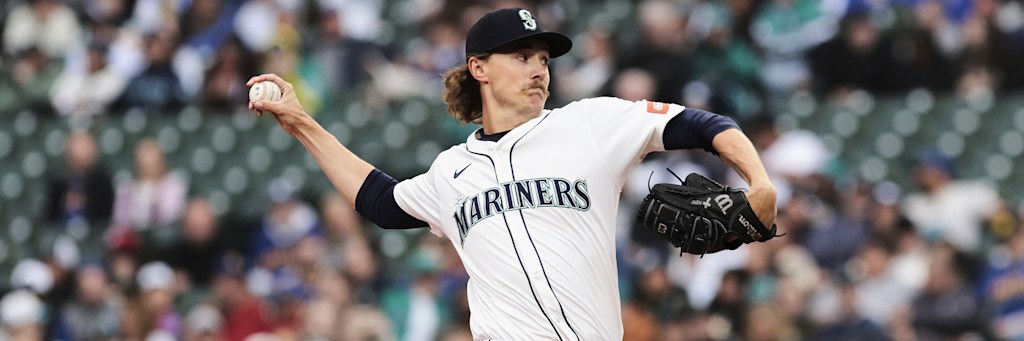
The Thursday board is a test of the model's second-hardest problem: not who wins, but by how much. Two of the six games feature a favorite so heavy that the moneyline has been bid past the point of value, which pushes the model off the winner and onto the margin. When the implied win probability climbs beyond two-thirds, the interesting question stops being whether the favorite wins and becomes whether the projected run distribution clears a margin of one. The July 2 card is built around that shift, with two run lines leading, two single-column team totals behind them, a win-probability lay in the one game the model reads as close, and a first-inning no-run projection to close it. Each output is ranked below by the gap between the model line and the market, adjusted for the variance the bet shape carries.
The Framework: When The Model Trades The Winner For The Margin
A run-environment model outputs a projected distribution of runs for each team, and from that distribution everything else follows. The moneyline reads the probability that one distribution finishes above the other. The run line reads the probability that it finishes above by more than one. The team total isolates a single distribution and asks where its median sits. On a slate with two sub-.500 road clubs visiting strong home favorites, the moneyline probabilities are so lopsided that the market has already priced them to -198 and -219, leaving no margin. The model responds by moving to the run line, where the same edge is available at a price that reflects the width of the margin distribution rather than the certainty of the win. The outputs below are ranked by that adjusted edge.
Mariners Run Line Minus One: The Cleanest Margin Input
| Item | Model detail |
|---|---|
| Run environment | Full game, T-Mobile Park (suppressing venue) |
| Starters | Bryce Miller (3-2, 1.97 ERA) vs Walbert Urena (5-6, 3.14 ERA) |
| Records | Mariners 44-43, Angels 36-51 |
| Series context | Seattle won the first two games 6-2 and 8-3 |
| Model line | Run line -1 (-147) |
This is the tightest margin projection on the board because every input compresses the Angels run distribution while widening Seattle's. Bryce Miller carries a 1.97 ERA, the lowest of any starter on the slate, and he works in T-Mobile Park, a venue with a long history of holding totals down. The Angels arrive at 36-51 with a distribution already shifted low, and the two games that opened this series, decided 6-2 and 8-3, are exactly the multi-run outcomes the run line is built to capture. When the model layers a sub-two ERA arm and a suppressing park on top of a fading road bat, the projected margin clusters at two or more, which is why the run line at -147 ranks first even though it is not the cheapest number on the card.
The honest counterweight is the shape of the bet. A run line at -1 still surrenders the one-run game, so a single Seattle bullpen inning that lets the Angels back within a run turns a projected comfortable win into a push or worse. The margin distribution is favorable, but its left tail is real, which is why this sits at the top on edge rather than being treated as a lock.
Dodgers Run Line Minus One: The Widest Talent Gap, A Softer Arm
| Item | Model detail |
|---|---|
| Run environment | Full game, Dodger Stadium |
| Starters | Roki Sasaki (3-5, 4.88 ERA, 72 K in 72 IP) vs Randy Vasquez (6-6, 4.44 ERA) |
| Records | Dodgers 56-31, Padres 43-42 |
| Model line | Run line -1 (-133) |
The second output backs the widest roster gap on the slate while accounting for a starter who does not suppress the way the record leader should. The Dodgers at 56-31 own the best distribution of runs in the sport, and their lineup depth is what drives the margin projection rather than the man on the mound. Roki Sasaki carries a 4.88 ERA, but the underlying strikeout rate, 72 in 72 innings, tells the model his contact suppression is better than the ERA, even if a 1.33 WHIP means the traffic is there. San Diego counters with Randy Vasquez at a 4.44 ERA, the lesser arm against the deeper lineup. The projected margin still clusters above one, which is why the run line at -133 ranks second, but it sits behind Seattle because Sasaki's walk rate widens the band and keeps the left tail, a one-run Dodgers win, more live than Miller's profile allows.
Padres Team Total Under 3.5: The Correlated Single Column
| Item | Model detail |
|---|---|
| Run column | San Diego Padres offense, at Dodger Stadium |
| Opposing starter | Roki Sasaki (RHP), 4.88 ERA, 72 K in 72 IP |
| Records | Padres 43-42, Dodgers 56-31 |
| Model line | Team total under 3.5 (-105) |
The third output is the mathematical companion to the Dodgers run line. If Los Angeles is projected to win by more than one, the same distribution implies San Diego is being held below its median run column, and the team total isolates that half of the projection. The under 3.5 at -105 captures it directly: the model is not asking how Los Angeles scores, only whether a 43-42 Padres offense clears four against Sasaki's strikeout rate. Because the two bets draw on the same underlying distribution, they are correlated by design, which is why the model keeps the team total a lighter, near-even output rather than stacking it as if it were independent evidence. The one-swing risk that busts any team total, a single three-run inning against Sasaki's walks, is the reason it ranks below the run lines despite the friendly price.
White Sox Team Total Under 4.5: A Middling Road Bat, Isolated
| Item | Model detail |
|---|---|
| Run column | Chicago White Sox offense, at Progressive Field |
| Opposing starter | Slade Cecconi (RHP), 4.18 ERA |
| Records | White Sox 45-40, Guardians 45-42 |
| Model line | Team total under 4.5 (-130) |
The fourth output isolates the Chicago run column in the one game the model reads as genuinely close. Slade Cecconi is not a suppression ace at a 4.18 ERA, so this projection does not lean on the arm the way the Padres under leans on Sasaki. Instead it leans on the shape of the Chicago offense, a 45-40 club whose road run distribution has a median that sits comfortably below five against league-average pitching. The under 4.5 at -130 captures that median without any exposure to how Cleveland scores. The steeper price is the catch: at -130 the output needs to clear roughly 57 percent, so the margin for a single Chicago rally is thinner than the near-even Padres number, which is why it ranks a notch below despite a clean single-column projection.
Guardians Win Probability: The One Close Game
| Output | Line | Primary input |
|---|---|---|
| Guardians moneyline | -110 | Home distribution edge in a coin-flip market |
The fifth output is the only moneyline on the card, and it lives in the one game where the two distributions overlap almost completely. Cleveland is -110 and Chicago -106, a market that calls this a pick, and the standings agree with two clubs a single game apart at 45-42 and 45-40. The model's win-probability edge here is small and comes from home run environment rather than pitching, because Chicago's Davis Martin, at 9-3 with a 3.00 ERA, is the stronger starter and shifts the road distribution up. The output leans Guardians because the home half of a near-symmetric projection carries a slight edge at an honest price, but it ranks fifth because a moneyline settles on one swing and the pitching input pulls against the pick.
Tigers-Rangers NRFI: A First-Inning Sub-Distribution
The final output narrows the projection to a single inning. A no-run-first-inning model asks only for the probability that neither team's first three or four hitters produce a run before the starters settle, and it is driven by first-inning run expectancy for the two arms on the mound rather than any full-game total. Detroit's Framber Valdez at a 4.05 ERA and Texas right-hander Nathan Eovaldi at a 3.95 ERA, riding three straight starts of one earned run or fewer, both carry low first-inning run-expectancy profiles. The model outputs the NRFI at -137 because two settled starters against two non-elite offenses cluster the first-frame distribution at zero. It ranks last only because a first-inning bet, like a moneyline, is a binary that one swing can flip, but the projection itself is among the cleanest on the board.
The Full Model Card, Ranked
| Rank | Output | Line | Why it ranks here |
|---|---|---|---|
| 1 | Mariners run line | -1 (-147) | Miller 1.97 ERA, suppressing park, fading road bat |
| 2 | Dodgers run line | -1 (-133) | Widest roster gap, but Sasaki widens the band |
| 3 | Padres team total under | 3.5 (-105) | Correlated single column, friendly price |
| 4 | White Sox team total under | 4.5 (-130) | Clean isolation, steeper juice |
| 5 | Guardians moneyline | -110 | Small home edge, pitching pulls against it |
| 6 | Tigers/Rangers NRFI | -137 | Clean first-inning model, binary tail |
That order tracks the width of each projection, not preference. The two run lines lead because their margin distributions cluster above one with real conviction, Seattle ahead of Los Angeles on the strength of Miller's arm and the park. The two team totals follow as single-column isolations separated by their juice, the Guardians moneyline sits fifth because its distributions overlap and the better starter is on the road, and the NRFI closes as a clean but binary first-inning model. Sizing should track the spread of each projection rather than the confidence of the headline.
What Beats This Card
A single crooked inning beats a run-prevention board every time. The Mariners run line loses if a bullpen inning lets the Angels back within one, and the Dodgers run line falls to the same one-run-win trap plus any early Sasaki walk that snowballs. The Padres and White Sox team totals each bust on one three-run frame from a major league bat. The Guardians moneyline is a true coin flip against a 9-3 starter, so Davis Martin can carry Chicago outright, and the NRFI dies on one first-inning swing before either starter settles. Lineups were not all confirmed at publication, so the projections assume listed regulars and probable starters. The model is favored on its outputs, but favored is a probability, not a result.
Final Verdict
The July 2, 2026 model breakdown outputs the Mariners run line -1 as its anchor, the cleanest margin projection on the board behind Bryce Miller and a suppressing park. The Dodgers run line -1 follows on the widest roster gap of the slate, and the Padres team total under 3.5 and White Sox team total under 4.5 isolate two road offenses by their single-column medians. The Guardians moneyline at -110 is the small home edge in the one close game, and the Tigers-Rangers NRFI at -137 is a first-inning sub-distribution behind Framber Valdez and Nathan Eovaldi. The through-line is the model trading the winner for the margin whenever the moneyline runs past its value. For more model work, see the June 30 run-prevention model, the advanced stats hub, the daily MLB breakdown picks, and the MLB futures board.
Related Model Breakdowns
More daily run-environment reads built on the same strikeout-rate and run-distribution framework:
- June 30 run-prevention model: Tigers-Yankees under, Angels and Pirates team totals
- June 29 run-prevention model: Rangers and Dodgers unders and a Mariners run line
For the inputs behind every projection, read how the MLB prediction model works, and review the model's public track record and graded results.